


More than one million seniors call assisted living communities home across our nation today. What’s remarkable is how these communities are changing in assisted living in Lake Mary, FL, has become something much more meaningful than traditional care. These places now pulse with energy, creativity and genuine growth opportunities.
In 2026, assisted living communities will have transformed into dynamic learning centers where seniors can develop new skills while maintaining cognitive health and discover unexpected talents.
Smart assisted living communities recognize this shift. They’re putting serious thought and resources into programs that help residents grow in ways that might surprise you. Come 2026, these communities will offer even more innovative paths for seniors to discover abilities they never knew they had, master new technologies and find fresh sources of joy and accomplishment.
Why is Continuous Learning Important for Maintaining Cognitive Health in Seniors?
Your brain doesn’t stop growing when you reach your senior years. Staying mentally active isn’t just beneficial for older adults; it’s essential for maintaining brain health. Acquiring new skills later in life can actually slow down cognitive aging and, in some cases, even reverse certain aspects of age-related decline.
How does learning new skills reduce the risk of cognitive decline?
When seniors learn new things, their brains create “cognitive reserve.” Think of it as building up your brain’s resistance to aging. Each time you tackle a new skill, your brain forms fresh neural pathways—and this process keeps happening well into your 80s and beyond.
One study that caught researchers’ attention followed older adults who took three concurrent courses (American Psychological Association, 2024) over a three-month period. The results were striking—their cognitive abilities improved significantly, to the point where they matched those of middle-aged adults initially and eventually performed as well as college students.
These benefits are available to all seniors, regardless of their educational background. Duke University found that a 71-year-old who engaged in later-life learning had cognitive function comparable to that of a 65-year-old average. Meanwhile, the University of Michigan has confirmed that seniors who continue learning enjoy better memory, sharper problem-solving skills and a lower risk of dementia.

The evidence is clear: assisted living communities now provide structured environments where continuous learning isn’t just encouraged—it’s essential for thriving in your senior years.
What are the Top 3 Unexpected New Skills Seniors Gain After Moving to Assisted Living?
Something extraordinary happens when you move past the old model of assisted living as simply “care.” Today’s communities have become places where residents surprise themselves—and their families—with abilities they never thought they had. These aren’t just activity programs; they’re genuine growth opportunities that reveal hidden talents and interests.
1. Digital communication and online navigation
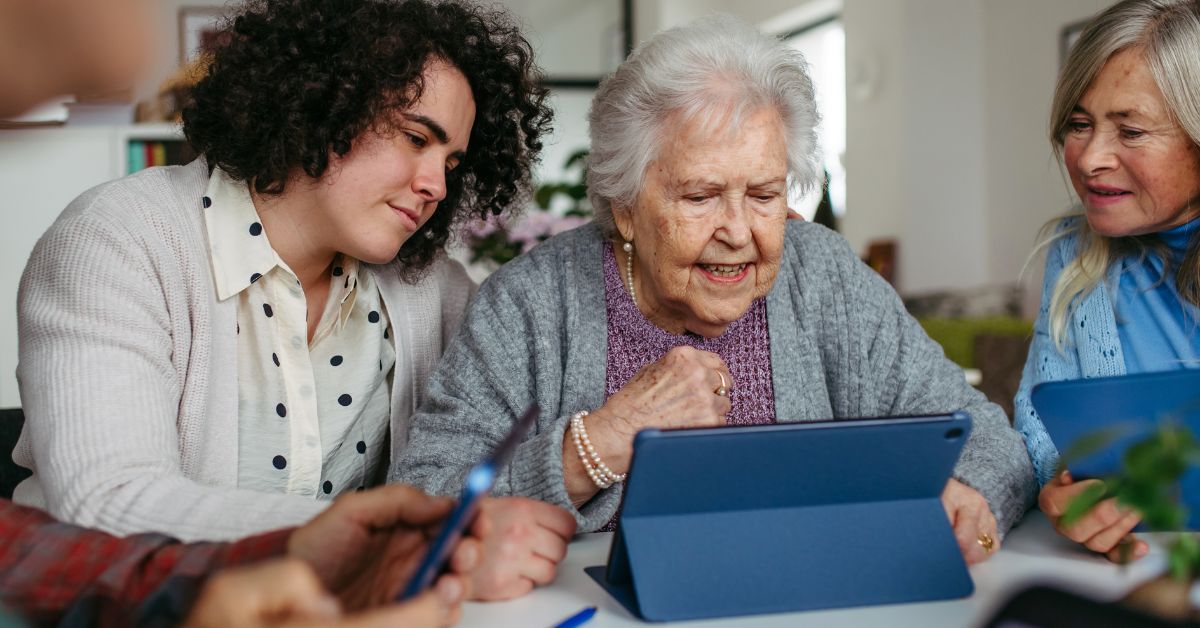
Here’s something that might surprise you: seniors are embracing technology in ways that would have seemed impossible just a few years ago. The numbers speak for themselves—89% of adults over 50 own smartphones and 59% own tablets. But what’s really exciting is watching someone discover they actually enjoy learning new apps, creating digital photo albums or even exploring basic coding concepts.
2. Artistic expression through painting or music
The creative spirit doesn’t diminish with age—it often finds new ways to flourish. Creative activities do more than just fill time; they actively support brain health and cognitive function. Smart communities now employ art therapists who understand how to unlock this potential through guided creative expression.
Perhaps most moving is this reality: someone with dementia might struggle to recognize a loved one’s face, yet they can still paint a stunning vase of flowers with the same skill they possessed years earlier. Communities are responding with dedicated art studios, woodworking shops, weaving studios and pottery spaces where these moments of clarity and creativity can flourish.
3. Group fitness and body-mind coordination
Maintaining coordination is essential for performing daily tasks such as walking, cleaning and climbing stairs. What’s changed is how communities approach fitness—not as an obligation, but as an opportunity to discover what your body can still do.
The magic happens when physical activity becomes a social connection. Group fitness classes create friendships while improving cardiovascular health, strength and flexibility. Suddenly, exercise isn’t about what you’ve lost—it’s about what you’re gaining: community, confidence and the joy of movement.
What Specific Classes or Programs Support Skill Development?
The best communities don’t just talk about growth—they create structured pathways for it to happen. These programs give residents the support and guidance they need to explore new interests safely and successfully.
- Language Learning: Courses tailored for older adults focus on practical conversations and culture (e.g., French, Spanish).
- Memory Workshops: Programs designed to strengthen recall and focus, providing residents with tools to support daily cognitive function.
- Art Therapy and Classes: Provides a vital non-verbal outlet for residents to express emotions and share personal stories through various mediums (painting, sketching, etc.).
- Adaptive Fitness Programs: Focus on maintaining balance, strength and mobility essential for daily independence. (Tai Chi, chair yoga, walking groups).
- Cooking and Nutrition Education: Hands-on workshops led by experts (often registered dietitians) focus on practical meal preparation and healthy eating.
Rediscovering Skills and Purpose
Something beautiful happens when we stop thinking of assisted living as just a place for care and start seeing it as a place for growth and development. These communities have quietly become centers where seniors rediscover parts of themselves they thought were lost or discover abilities they never knew they had.
What makes this moment in assisted living so exciting is the intentionality behind these programs. Communities aren’t just offering random activities to fill time. They’re designing experiences that matter: language classes that can delay the onset of dementia by years, art therapy that helps process emotions while strengthening fine motor skills and fitness programs that help residents remain independent longer.
Your family deserves an environment like this. If you’re curious about what skilled, purposeful living looks like for your loved one, consider scheduling a tour at Marina Isle Waterfront Assisted Living by calling (407) 499-7300. Sometimes, the best way to understand the difference is to see it firsthand.
FAQs
Q1. How does continuous learning benefit seniors in assisted living?
Continuous learning creates cognitive reserve, which can slow or even reverse age-related mental decline. Studies show that seniors who engage in learning activities can improve their cognitive abilities to levels comparable to those of 30-year-olds, with benefits lasting over a year.
Q2. What unexpected skills do seniors often develop in assisted living communities?
Seniors often develop skills in digital communication and online navigation, artistic expression through painting or music and enhanced body-mind coordination through group fitness activities. These skills contribute to enhanced cognitive function, stronger social connections and improved overall well-being.
Q3. How does having a sense of purpose impact seniors’ health and longevity?
A strong sense of purpose is directly linked to increased longevity in seniors. Research shows that individuals with high purpose scores have significantly lower mortality rates, reduced risk of cardiovascular disease and cognitive decline and tend to engage in more preventive healthcare practices.