




Here’s a startling reality: nearly one-quarter of adults aged 65 and older live with social isolation. This goes far beyond feeling lonely on occasion—isolation poses real danger to senior health. Yet assisted living in Lake Mary, FL, offers hope for addressing this serious health crisis.
The science is clear—we need each other to thrive, especially in our senior years. Quality assisted living transforms isolation into connection, creating environments where seniors don’t just survive, but flourish through meaningful relationships and community engagement.
Marina Isle understands something important—quality care means more than meeting basic needs. Our community focuses on fostering real connections between residents. You’ll learn how their social approach works, which emotional needs we address and why many families report their loved ones actually thrive better in assisted living than living alone at home.
What is the Social Model of Assisted Living Exactly?
The social model of assisted living breaks away from the sterile, medical-first approach you might expect from traditional nursing homes. Instead of treating residents as patients who need fixing, this model sees whole people—with unique abilities, personal desires and individual needs—who deserve to live in spaces that feel like home, not institutions.
What role do shared meals and group activities play?
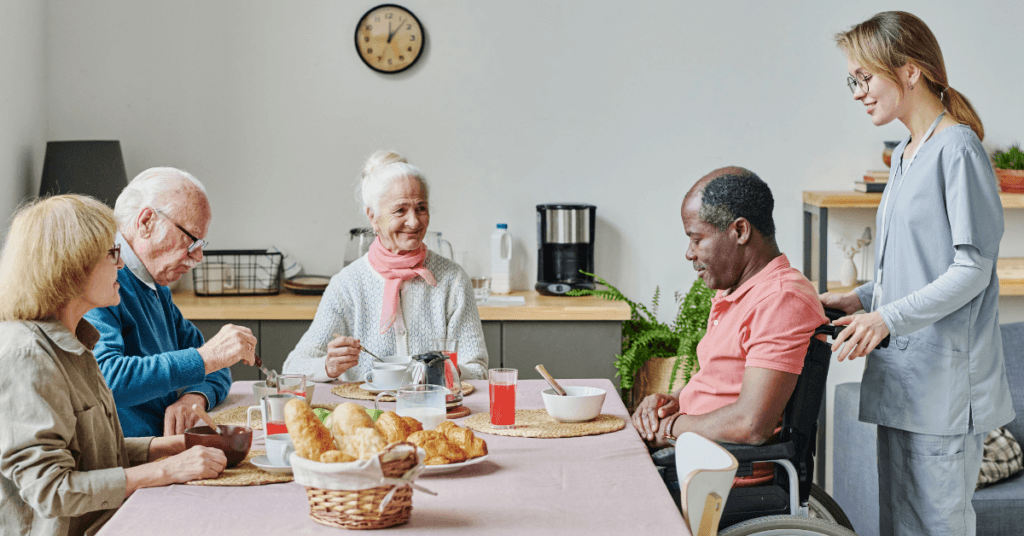
Think about your own best conversations. Chances are, many happened around a dinner table. Assisted living communities understand this truth deeply. When residents share meals together, something magical happens beyond simple nutrition. Research calls this “commensality”—the act of eating socially—and it delivers remarkable benefits for both body and mind. The numbers are striking: social eating can increase food intake by up to 60% among older adults (Middleton et al., 2022).
These shared meal programs create natural spaces for relationships to bloom. Conversations start organically, friendships form without force and residents discover common ground over shared experiences. The community extends this philosophy to activities too—exercise classes, art sessions, book discussions and game nights become bridges connecting residents who share similar passions.
Can assisted living help shy or introverted seniors make friends?
This question touches on a common worry and the answer might surprise you. Introverted seniors often find assisted living environments perfect for their needs. These communities provide private apartments that serve as personal retreats—quiet spaces where residents can recharge through reading, crafting or simply enjoying solitude. The person-centered care approach honors each resident’s social preferences, helping them discover their sweet spot between meaningful connection and peaceful alone time.
What Emotional Needs Does Assisted Living Help Fulfill?
Physical care tells only part of the story. Emotional well-being sits at the heart of what makes assisted living truly meaningful. These deeper needs—often ignored in traditional care settings—receive the attention they deserve in thoughtful communities, where seniors don’t just survive but actually flourish.
How does assisted living reduce feelings of being a burden?
The weight of feeling like a burden crushes many seniors silently. This worry becomes especially heavy after losing a spouse or when adult children live hours away. Assisted living communities understand this struggle and respond with environments where support flows naturally, allowing residents to expand their lives rather than shrink them.
Why is emotional safety just as important as physical safety?
Emotional safety ranks as a fundamental psychological need, particularly for older adults facing increased vulnerability. Something beautiful happens when seniors feel emotionally secure—anxiety melts away, making room for better mental wellness. This clearer state of mind opens doors to a more active, engaged lifestyle that keeps cognitive functions sharp and emotions balanced. Emotional safety gives residents permission to focus on relationships and personal growth rather than worry about potential accidents or emergencies.
How do residents regain a sense of purpose?
Purpose doesn’t retire when we do—it simply finds new expression. Assisted living communities create space for residents to discover fresh meaning through mentoring younger residents, serving on councils or helping shape community decisions. Through volunteer work, creative projects and meaningful daily routines, residents make an important discovery—they don’t just live in these communities; they truly belong.
More Than Basic Care
Relationships sustain us throughout life and become even more crucial in our later years. Assisted living communities offer far more than basic care services; they create environments where meaningful connections flourish and isolation loses its grip. Your retirement years shouldn’t include loneliness. Call us today at (407) 499-7300 to schedule a personal tour of Marina Isle Waterfront Assisted Living. Discover how our approach to community-centered living can help you or someone you care about truly flourish.
FAQs
Q1. How does assisted living help seniors stay socially connected?
Assisted living makes social connections part of everyday life. Residents are naturally brought together through shared meals, planned activities, clubs and group outings. These built-in opportunities make it easier to stay engaged, form friendships and avoid the isolation that can happen when living alone.
Q2. What health benefits come from staying socially active as we age?
Staying socially engaged has a big impact on health. Seniors who regularly connect with others often experience slower cognitive decline, lower risk of chronic illness, stronger immune systems and even longer life expectancy. Social interaction also boosts mood, reduces stress and supports emotional resilience.
Q3. How does assisted living support emotional well-being?
Assisted living communities focus on helping seniors feel supported and valued. By providing help with daily tasks, residents often feel less like a burden on family members. They also gain a renewed sense of purpose through activities, relationships and routines—all while knowing support is always nearby.